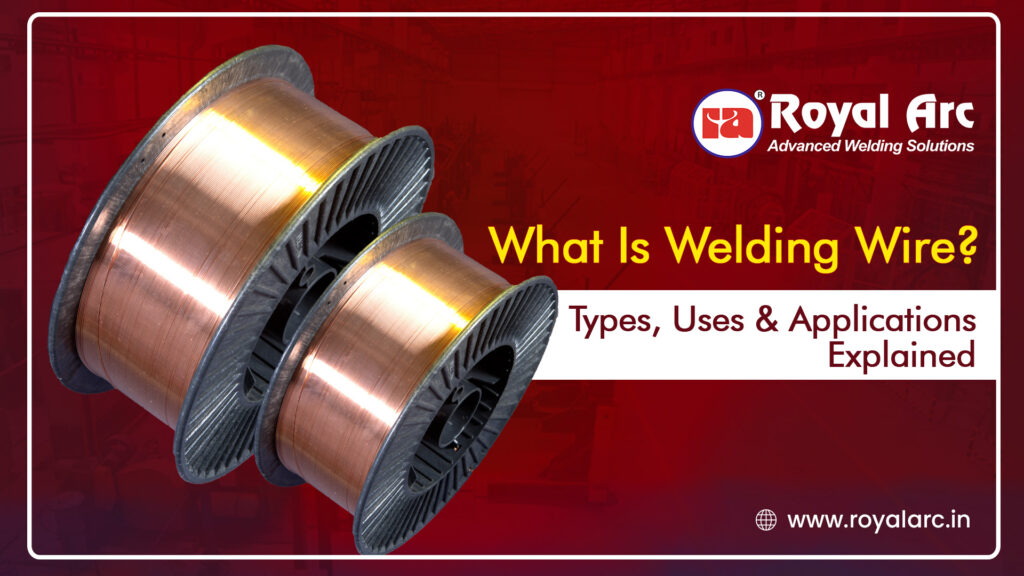
What Is Welding Wire? Types, Uses & Applications Explained
Welding has become an important process in today’s industrial and construction sectors. Welding is required in every sector, like machinery manufacturing, structural fabrication, automobile and pipeline. But strong and safe welding depends heavily on selecting the correct welding wire, which is crucial for industry professionals aiming for high-quality results. Welding wire is a means of permanently joining two metals. If the wire quality is not correct, the entire joint can become weak. For this reason, welding wire is considered the backbone of welding in industry. In this blog, we will understand in detail what welding wire is. We will learn in detail about how welding wire works, its types, uses, and industrial applications. So, let’s move on to the main topic: What Is Welding Wire? Welding wire is a metal wire used as a filler material in the welding process. This wire melts during welding and acts as a filler between two metal surfaces. The primary purpose of welding wire is to create a strong, uniform, and durable weld joint. The types and composition of welding wire vary depending on the welding process. Some wires are continuously fed, while others are manually applied. Selecting the correct welding wire ensures the strength, finish, and safety of the weld. Therefore, welding wire is not just a consumable, but the most important component of welding. How Welding Wire Works in Welding Processes? Welding wire plays an active role during the welding process. When the welding machine is turned on, an electric arc is formed between the welding wire and the base metal. This arc generates intense heat, causing the wire and base metal to melt. The molten welding wire fills the weld joint and creates a strong fusion. In some processes, shielding gas or flux protects the wire from outside air. As the weld cools, a solid and durable joint is formed. The purity and quality of welding wire play a crucial role in this entire process. Types of Welding Wire? Welding wire comes in many types depending on the welding process and application. Each type is designed for a specific purpose. Welding wire is broadly classified into MIG, TIG, Flux Cored, and SAW wire, each with unique benefits and limitations. For example, MIG wires are ideal for high-speed, clean welding, while TIG wires offer precision for critical applications. Understanding these differences enables professionals to select the most effective wire for their specific welding needs. The selection of each wire depends on the base metal, welding position, and working environment. The right type of welding wire makes welding easier, safer, and more effective. MIG Welding Wire and Its Applications MIG Welding Wire is one of the most commonly used welding wires. It provides continuous feed and fast welding. Welding with MIG Welding Wire is clean and uniform. It is used in the automobile industry, fabrication, structural work, and machinery manufacturing. Industries prefer MIG Welding Wire due to its high productivity and low spatter. It is particularly suitable for light and medium-thick metals. TIG Welding Wire and Its Applications TIG Welding Wire is used for high-precision welding. The wire is manually fed, providing complete control over the weld. Welds made with TIG Welding Wire are clean, strong, and beautiful. It is used in welding stainless steel, aluminium, and special alloys. TIG Welding Wire is widely used in the food industry, chemical plants, and aerospace sectors. Where finish and quality are paramount, this welding wire is the ideal choice. Materials Used in Manufacturing Welding Wire Uses of Welding Wire in Different Industries Common Welding Problems Caused by Poor Quality Welding Wire Therefore, selecting high-quality welding wire is essential to prevent common problems like porosity and cracks, helping students and professionals feel confident in the reliability of their work. What to consider when choosing welding wire? Why Choose Royal Arc for Welding Wire Solutions? This is why Royal Arc is preferred for many industrial projects. Conclusion Welding wire is the most critical component of the welding process. It determines the strength, safety, and lifespan of the weld. Choosing the right welding wire ensures the success of any project. If you want quality and reliable results in industrial welding, choosing the right welding wire is essential. Royal Arc works with this vision to provide high-quality welding solutions to industrie FAQs