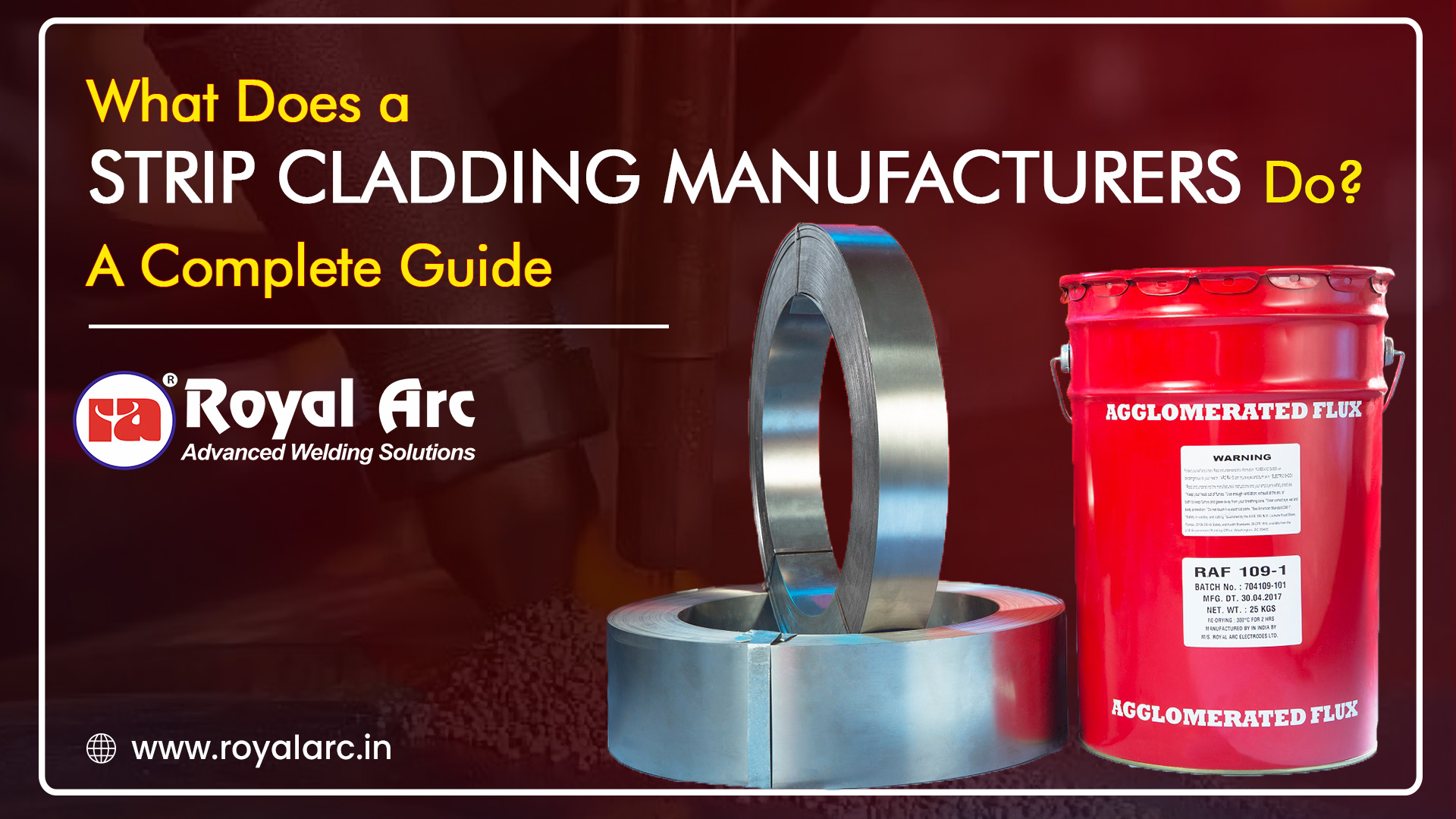
In modern industries, simply maintaining equipment and metal surfaces isn’t enough. They also need to be protected from corrosion, wear, temperature, and chemical effects. This is where Strip Cladding technology plays a crucial role.
When industries seek long-lasting solutions, they seek an experienced Strip Cladding Manufacturer. A dependable manufacturer doesn’t just make the product, but also makes sure the right materials, the right processes, and quality. This is why Strip Cladding is more used in the energy, oil & gas, heavy construction and process industries today.
In this blog, we will understand what Strip Cladding is and why it is important to choose the right Strip Cladding Manufacturer. So let’s move on to the main topic:
What is Strip Cladding?
Strip Cladding is a welding-based surface protection process. In this, a layer of special alloy strip is applied on the surface of a base metal. Strip cladding is used when the base metal is strong, but the surface needs corrosion resistance or temperature resistance.
This process reduces the need to make the entire device from expensive alloys. This means that better performance can be achieved at lower costs. This is why many industries consider Strip Cladding a practical and budget-friendly solution.
What Does a Strip Cladding Manufacturer Do?
A Strip Cladding Manufacturer doesn’t just supply cladding materials. Their role is much broader. The manufacturer first understands the application requirements and determines which type of cladding strip is suitable. Then the correct materials, sizes and product details are prepared.
An experienced Strip Cladding Manufacturer controls the production process, ensuring that the strip’s composition, performance, and quality meet the required standards. The manufacturer also provides technical assistance, supply support and application guidance.
Importance of Strip Cladding in Industrial Applications
Industrial equipment often operates under harsh conditions. Sometimes high temperatures, chemicals, pressure and friction can cause the surface to rust quickly.
In such conditions, strip cladding extends the equipment’s lifespan. This provides additional protection to the surface, reducing maintenance and downtime.
This technique is very useful in boilers, pressure vessels, reactors and piping systems.
This is why a dependable Strip Cladding Manufacturer is considered important in industrial projects.
Types of Strip Cladding Materials
Different materials are used for strip cladding.
- Material selection depends on the application and service conditions.
- Stainless steel-based strip cladding is used for corrosion resistance.
- Nickel-based cladding is used for high-temperature and chemical environments.
- Low-alloy and special alloy cladding are also used in some industries.
Each material has its own role. Therefore, the expertise of a Strip Cladding Manufacturer is crucial in selecting the right material.
How Strip Cladding Manufacturing Works?
Strip Cladding manufacturing is a controlled technological process. First, suitable raw materials are selected. Then the chemical composition and quality of the material is checked.
After this, the strip is prepared as per the manufacturing process. Sizes, thickness and performance parameters are checked. Then each batch goes through quality testing.
A competent Strip Cladding Manufacturer maintains consistency throughout the process. This makes sure quality and performance.
Fundamental Responsibilities of a Strip Cladding Manufacturer
A Strip Cladding Manufacturer’s responsibilities are not limited to production. They must work at both the technical and quality levels.
The main responsibilities are:
- Developing the right cladding material.
- Maintaining stable quality.
- Following technical standards.
- Providing application-based solutions.
- Ensuring timely delivery.
- Providing technical support to the customer.
These responsibilities make a manufacturer not just a supplier, but an industrial partner.
Factors to Consider When Choosing a Strip Cladding Manufacturer
Choosing the right Strip Cladding Manufacturer is crucial. It is not right to choose based only on price. The manufacturer’s experience should be considered. Their technical capabilities and production standards should be understood. Quality certifications and test reports are essential.
Supply networks and technical support are also important. A good manufacturer provides long-term, reliable solutions. Therefore, quality should be given importance when making a selection.
Role of Quality Standards and Certifications in Strip Cladding Manufacturing
Quality in strip cladding should not just be claimed; it should be proven. This is where quality standards and certifications become important. Adherence to ISO, AWS and other technical standards increases product reliability.
Certified products provide consistency in performance. They make sure industrial safety and compliance.
A responsible Strip Cladding Manufacturer always prioritises quality standards. This is what builds long-term customer trust.
Why Choose Royal Arc?
Royal Arc is a trusted name in the field of welding and cladding solutions. The company provides high-quality cladding solutions.
Royal Arc focuses on technical expertise, quality check and stable supply. Every product is made available only after quality testing.
As an experienced Strip Cladding Manufacturer, Royal Arc provides application-focused solutions to industries. This is why many industrial customers trust Royal Arc.
Conclusion
Strip cladding is not just a surface coating, but a solution for industrial safety and performance. This increases equipment life, reduces corrosion and saves costs.
This is why choosing the right strip cladding manufacturer is crucial. Experience, quality, technical support and dependable supply all play a role in the selection.
If you want high-quality solutions, Royal Arc is the right choice for you. Royal Arc is an experienced Strip Cladding Manufacturer.