Quality, strength, and consistency are considered paramount in the modern welding industry. In every industrial project, welding is not limited to just making joints.
Welding determines the safety, lifespan, and performance of structures, making the quality and selection of the correct welding wire essential for reliable results.
In today’s time, Mig Wire has become an important part of the welding industry. Industries prefer MIG welding due to faster production, clean finish and strong joints. If the Mig Wire quality is not up to the mark, even the best machines and skilled welders can produce poor results.
In this blog, we will understand in detail what is Mig Wire, how it works, its types, uses and advantages. So, let’s move on to the main topic:
What is MIG Wire?
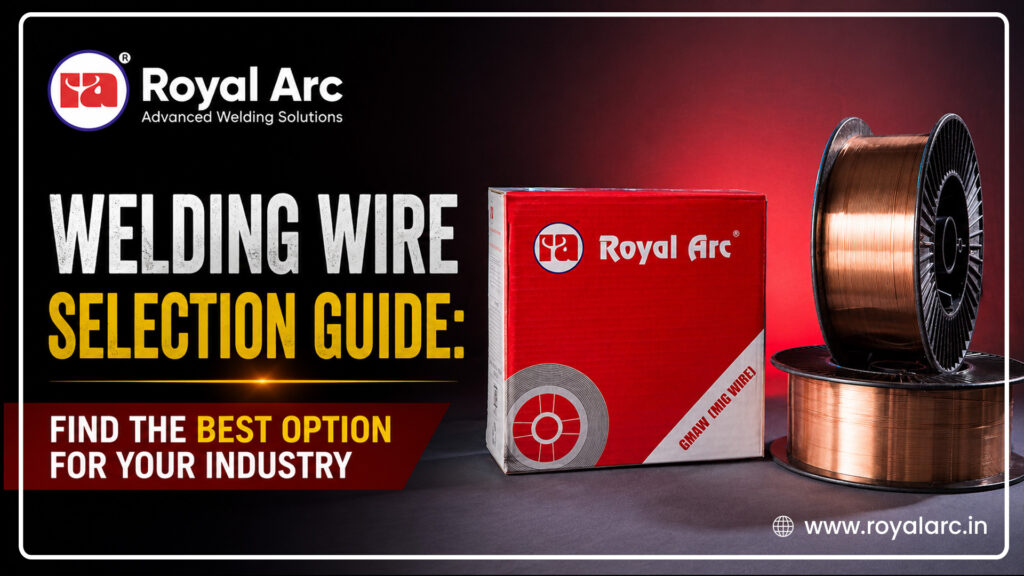
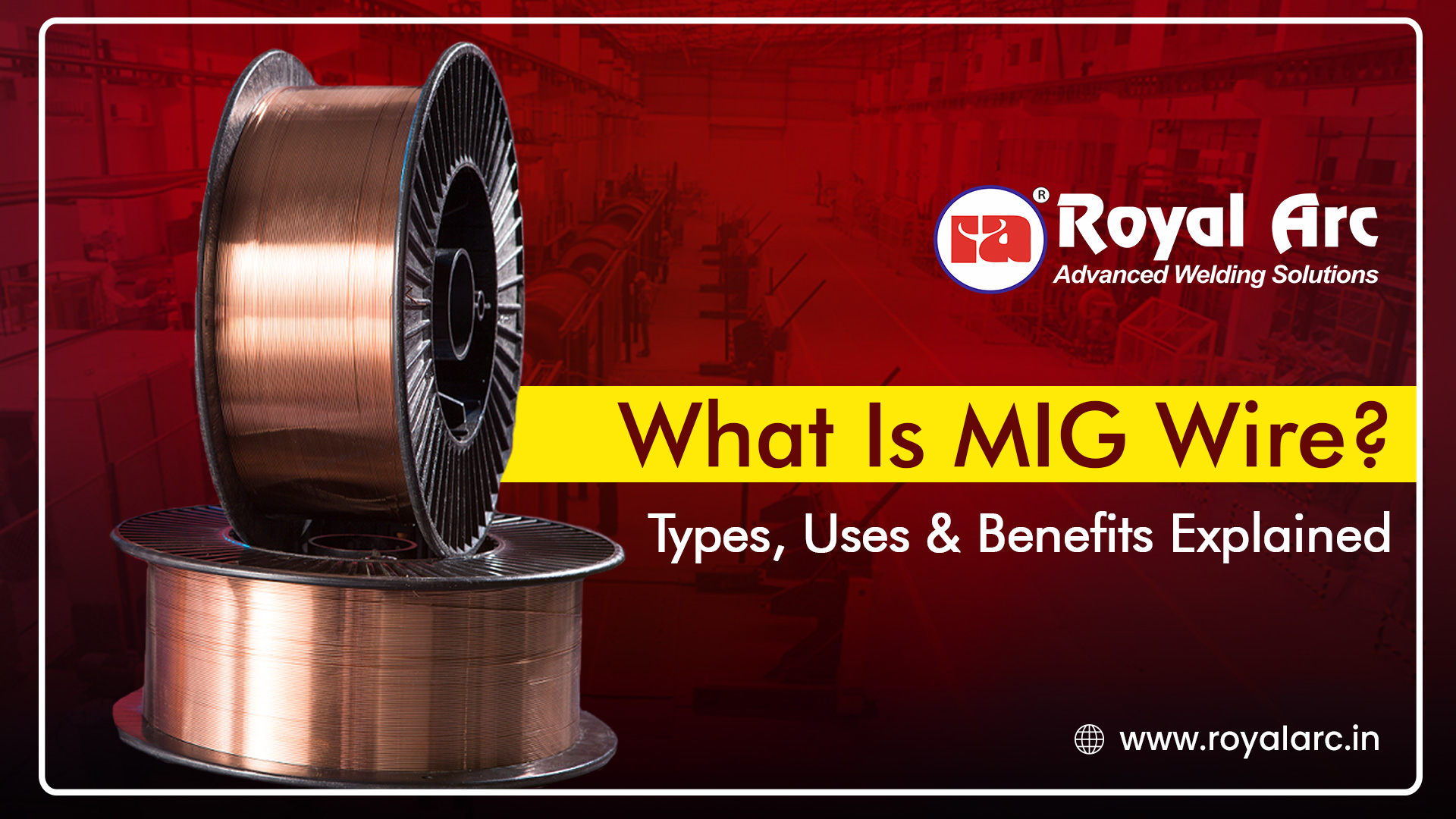
Mig wire is a special type of welding wire that is used in the MIG welding process. It is a thin metal wire that is continuously fed through the welding machine. Mig Wire melts during welding to form a strong and permanent joint between two metals.
The biggest feature of Mig Wire is its continuous feed system. This ensures faster welding and production. This wire is available in different metal grades and thicknesses. This is why Mig Wire is most commonly used in industrial and large-scale welding projects.
How MIG Welding Works?
MIG Welding is a continuous welding process. In this process, MIG wire is continuously fed through a welding gun. As the MIG wire comes into contact with the base metal, an electric arc is generated.
This arc produces high temperatures, causing the MIG wire and base metal to melt. Shielding gas protects the weld pool from air, moisture, and oxygen. After the metal melts and cools, a strong weld joint is formed.
Difference Between MIG Wire and Other Welding Wire
Not every welding wire performs the same function. MIG wire is specifically designed for fast and consistent welding. It works with automatic feed system.
Other welding wires like SMAW or TIG wire require more manual intervention. The welder has to change the electrode frequently, which slows down the production speed.
MIG wire moves continuously and maintains welding consistency. This is why MIG wire is preferred for large and repeated projects.
Types of MIG Wire
- Many types of MIG wire are available, each designed to meet specific metals and application requirements, ensuring optimal performance for different projects.
- Carbon Steel Mig Wire is used in general fabrication and construction applications.
- Stainless Steel Mig Wire is used for corrosion resistance and a clean finish.
- Aluminum Mig Wire is widely used in the lightweight and automobile industries.
- Flux-cored MIG wire is suitable for outdoor and heavy welding operations.
- Each type of MIG wire is selected based on the base metal and the job requirements.
Materials Used in MIG Wire
Mig wire is made from various metals and alloys. The most common material is carbon steel. Stainless Steel Mig Wire Provides High Corrosion Resistance.
Aluminum based Mig Wire helps in making light but strong joints. Special alloy Mig Wire is made for high temperature and pressure environments. Correct material selection determines the quality of welding and the life of the joint.
Uses of MIG Wire in Different Industries
MIG wire is used in almost every industrial sector.
It is used for body and frame welding in the automobile industry.
Mig Wire is useful for beams, columns and structures in the construction sector.
It is used for heavy parts and housings in the machinery industry.
Mig wire is essential for pipeline welding in the oil and gas industry.
Due to its fast and strong results, Mig Wire has become the first choice of industries.
Benefits of Using MIG Wire
Mig wire gives several important advantages.
- This significantly increases the welding speed.
- Less spatter is generated during welding.
- The weld bead is clean and uniform.
- The learning process is easier, and productivity increases.
- Less rework saves both time and cost.
- This is why Mig Wire is considered the modern welding wire solution.
How MIG Wire Improves Weld Quality?
High-quality MIG wire provides deeper penetration to the weld.
This makes the joint stronger and more durable.
Possibility of porosity and cracking in the weld is reduced.
A clean finish reduces post-weld processing.
The structural strength of the weld is maintained for a long time.
Therefore, the right MIG wire plays a vital role in improving weld quality.
Factors to Consider While Choosing MIG Wire
- Mig wire should be selected wisely.
- The type of base metal should be considered first.
- The thickness of the metal and the welding position are also important.
- The compatibility of the Mig Wire with the shielding gas and base metal type should be checked through manufacturer specifications and testing to prevent welding issues.
- The brand, grade and certification of the wire should also be checked.
- The right choice of MIG wire ensures better results, higher efficiency, and lower costs, giving you confidence in your welding outcomes.
Why Choose Royal Arc?
- Royal Arc is a trusted name in the welding industry.
- Royal Arc provides high quality Mig Wire and Welding Wire solutions that meet international standards such as AWS and ISO, ensuring reliability and safety.
- Every product goes through strict quality testing.
- Royal Arc provides stable supplies and technical support to industries.
- The products are made as per international standards.
This is why many industries choose Royal Arc for their important projects.
Conclusion
Mig wire has become a strong foundation of modern industrial welding. It provides fast, clean and strong welding results. Choosing the right Mig Wire and Welding Wire determines the success of the project.
If you want quality, safety, and durability in welding, the right choice of Mig Wire is essential. Royal Arc follows this philosophy and provides reliable and high-performance welding solutions to industries.