MIG TIG Wire vs Flux-Cored Wire: What’s the Difference?
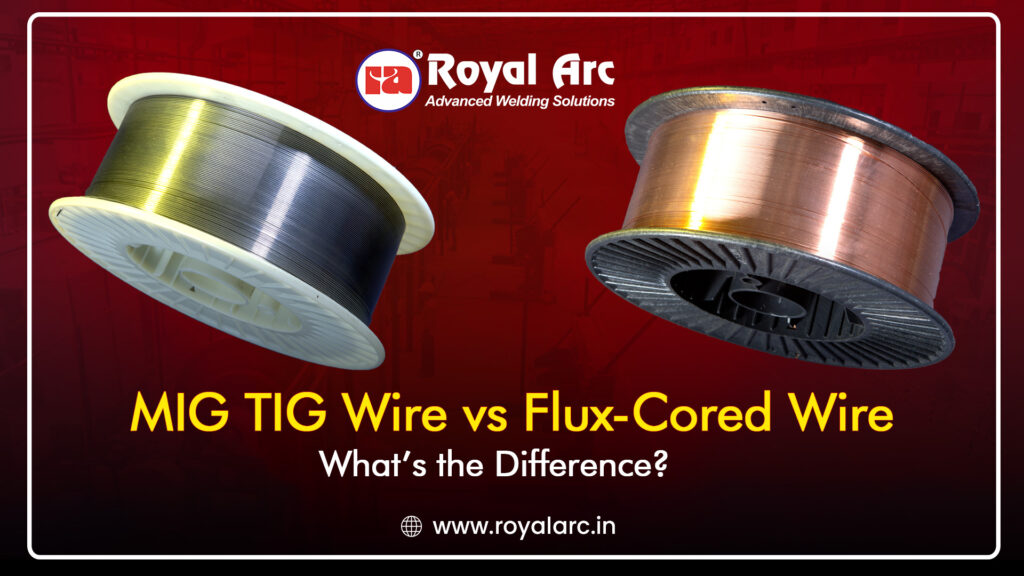
In the world of welding, the right wire directly impacts weld quality, productivity, and project costs. This is why industries compare Mig Wire and Flux Cored Wire to make the right choice. Both MIG and Flux-Cored wires are popular. They have different uses and advantages. However, it’s important to understand which wire is best for which purpose. Sometimes choosing the wrong wire affects weld quality and also increases costs. In this blog, we will understand the difference between Mig Wire and Flux Cored Wire, uses, performance and important aspects of selection. So let’s move on to the blog and MIG TIG Wire vs Flux-Cored Wire: What’s the Difference? What is MIG Wire? Mig Wire is a continuous feed welding wire. It is used in the MIG welding process and creates strong fusion with the base metal. Mig wire works with a shielding gas during welding. This gas protects the weld pool from external air and moisture. This results in clean, controlled welds with less spatter. Industries prefer Mig Wire for its fast production, good finish and stable results. This is why it is widely used in automobiles, fabrication and manufacturing. What is Flux-Cored Wire? Flux Cored Wire is also a type of Welding Wire. The structure of this wire is different. It is filled with flux, which provides protection during welding. Some Flux Cored Wire works with external gas. Some are self-shielded and do not require separate gas. This wire is useful for heavy duty work, outdoor welding and deep penetration jobs. This is why many industries choose Flux Cored Wire in harsh environments. How Mig Wire and Flux-Cored Wire Work? Mig Wire works with the help of an electric arc and shielding gas. The wire melts, joins the base metal, and creates a clean weld. Flux-cored wire also operates with an arc, but the flux provides protection. This keeps the weld pool stable and protects it from external influences. Both perform wire welding, but the safety mechanisms and usage conditions are different. This is where the difference in performance between the two begins. Differences Between Mig Wire and Flux-Cored Wire: Welding Performance Comparison: Mig wire is known for clean and controlled welding. It gives less spatter and provides a better finish. Flux-cored wire offers stronger performance in heavy welding. It can work better on hard surfaces and in outdoor environments. If precision is required, Mig Wire may be a good option. In tough conditions, flux-cored wire may be more useful. Strength and Penetration Comparison: Flux-cored wire performs significantly better when it comes to deep penetration. It is suitable for thick sections and heavy-duty applications. Mig Wire also produces strong welds, but its focus is more on controlled welding. Therefore, the selection may vary depending on strength requirements. Cost and Productivity Comparison: Welding with MIG wire is cleaner, which can reduce post-cleaning. This can save time. Flux Cored Wire can provide faster deposition.  This can increase productivity, especially in heavy welding. When comparing costs, wire costs, gas costs, and labor should be considered together. Applications of Mig Wire in Different Industries: Mig wire is used in many industries. It is used for body and frame welding in the automobile industry. Mig wire is preferred in the fabrication industry for clean and controlled welding. It is also used in machinery manufacturing and light structural work. Where appearance and consistent quality are essential, Mig Wire makes an effective solution. Applications of Flux Cored Wire in Different Industries Flux Cored Wire finds widespread use in the heavy-duty sector. It is very useful in construction and structural welding. It is used in shipbuilding, heavy fabrication, and repair work. Flux Cored Wire is also popular on outdoor sites. Where toughness and penetration are required, it becomes a good option. Which Wire is Better for Indoor and Outdoor Welding? Mig Wire is often considered better for indoor welding. It delivers excellent results in a controlled environment. Outdoor conditions can create challenges due to wind and climate. In such a situation, Flux Cored Wire often gives better performance.  But the right choice always depends on the application. Decisions should not be taken only on the basis of indoor or outdoor. Common Mistakes While Choosing Between Mig Wire and Flux Cored Wire Factors to Consider Before Selecting the Right Welding Wire There are several things to consider when choosing the right welding wire. It’s important to understand the type of base metal, the thickness of the project, and the welding position. The work environment is also important. Indoor and outdoor conditions may change the decision. Production targets, costs and expected quality must also be taken into account. These factors make it possible to select the right Mig Wire or Flux Cored Wire. Why Choose Royal Arc for Mig and Flux Cored Wire Solutions? This is why many customers choose Royal Arc for welding wire solutions. Conclusion Both Mig Wire and Flux Cored Wire have their roles. One is known for precision and clean welding. The other is useful for strength and tough conditions. The right choice depends on the application, cost, productivity and performance. If these factors are understood and decisions are made, better welding results can be achieved. Choosing the right wire with the Royal Arc brand can make this decision even stronger.

What Does a Strip Cladding Manufacturer Do? A Complete Guide
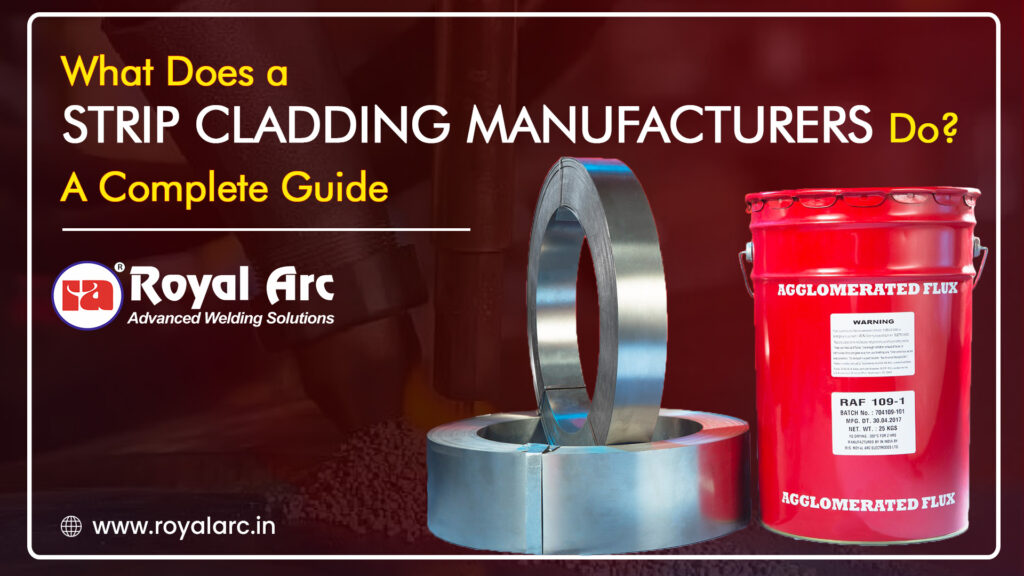
In modern industries, simply maintaining equipment and metal surfaces isn’t enough. They also need to be protected from corrosion, wear, temperature, and chemical effects. This is where Strip Cladding technology plays a crucial role. When industries seek long-lasting solutions, they seek an experienced Strip Cladding Manufacturer. A dependable manufacturer doesn’t just make the product, but also makes sure the right materials, the right processes, and quality. This is why Strip Cladding is more used in the energy, oil & gas, heavy construction and process industries today. In this blog, we will understand what Strip Cladding is and why it is important to choose the right Strip Cladding Manufacturer. So let’s move on to the main topic: What is Strip Cladding? Strip Cladding is a welding-based surface protection process. In this, a layer of special alloy strip is applied on the surface of a base metal. Strip cladding is used when the base metal is strong, but the surface needs corrosion resistance or temperature resistance. This process reduces the need to make the entire device from expensive alloys. This means that better performance can be achieved at lower costs. This is why many industries consider Strip Cladding a practical and budget-friendly solution. What Does a Strip Cladding Manufacturer Do? A Strip Cladding Manufacturer doesn’t just supply cladding materials. Their role is much broader. The manufacturer first understands the application requirements and determines which type of cladding strip is suitable. Then the correct materials, sizes and product details are prepared. An experienced Strip Cladding Manufacturer controls the production process, ensuring that the strip’s composition, performance, and quality meet the required standards. The manufacturer also provides technical assistance, supply support and application guidance. Importance of Strip Cladding in Industrial Applications Industrial equipment often operates under harsh conditions. Sometimes high temperatures, chemicals, pressure and friction can cause the surface to rust quickly. In such conditions, strip cladding extends the equipment’s lifespan. This provides additional protection to the surface, reducing maintenance and downtime. This technique is very useful in boilers, pressure vessels, reactors and piping systems. This is why a dependable Strip Cladding Manufacturer is considered important in industrial projects. Types of Strip Cladding Materials Different materials are used for strip cladding. Each material has its own role. Therefore, the expertise of a Strip Cladding Manufacturer is crucial in selecting the right material. How Strip Cladding Manufacturing Works? Strip Cladding manufacturing is a controlled technological process. First, suitable raw materials are selected. Then the chemical composition and quality of the material is checked. After this, the strip is prepared as per the manufacturing process. Sizes, thickness and performance parameters are checked. Then each batch goes through quality testing. A competent Strip Cladding Manufacturer maintains consistency throughout the process. This makes sure quality and performance. Fundamental Responsibilities of a Strip Cladding Manufacturer A Strip Cladding Manufacturer’s responsibilities are not limited to production. They must work at both the technical and quality levels. The main responsibilities are: These responsibilities make a manufacturer not just a supplier, but an industrial partner. Factors to Consider When Choosing a Strip Cladding Manufacturer Choosing the right Strip Cladding Manufacturer is crucial. It is not right to choose based only on price. The manufacturer’s experience should be considered. Their technical capabilities and production standards should be understood. Quality certifications and test reports are essential. Supply networks and technical support are also important. A good manufacturer provides long-term, reliable solutions. Therefore, quality should be given importance when making a selection. Role of Quality Standards and Certifications in Strip Cladding Manufacturing Quality in strip cladding should not just be claimed; it should be proven. This is where quality standards and certifications become important. Adherence to ISO, AWS and other technical standards increases product reliability. Certified products provide consistency in performance. They make sure industrial safety and compliance. A responsible Strip Cladding Manufacturer always prioritises quality standards. This is what builds long-term customer trust. Why Choose Royal Arc? Royal Arc is a trusted name in the field of welding and cladding solutions. The company provides high-quality cladding solutions. Royal Arc focuses on technical expertise, quality check and stable supply. Every product is made available only after quality testing. As an experienced Strip Cladding Manufacturer, Royal Arc provides application-focused solutions to industries. This is why many industrial customers trust Royal Arc. Conclusion Strip cladding is not just a surface coating, but a solution for industrial safety and performance. This increases equipment life, reduces corrosion and saves costs. This is why choosing the right strip cladding manufacturer is crucial. Experience, quality, technical support and dependable supply all play a role in the selection. If you want high-quality solutions, Royal Arc is the right choice for you. Royal Arc is an experienced Strip Cladding Manufacturer.

Why Choose E8018 Welding Electrodes for Heavy-Duty Applications?
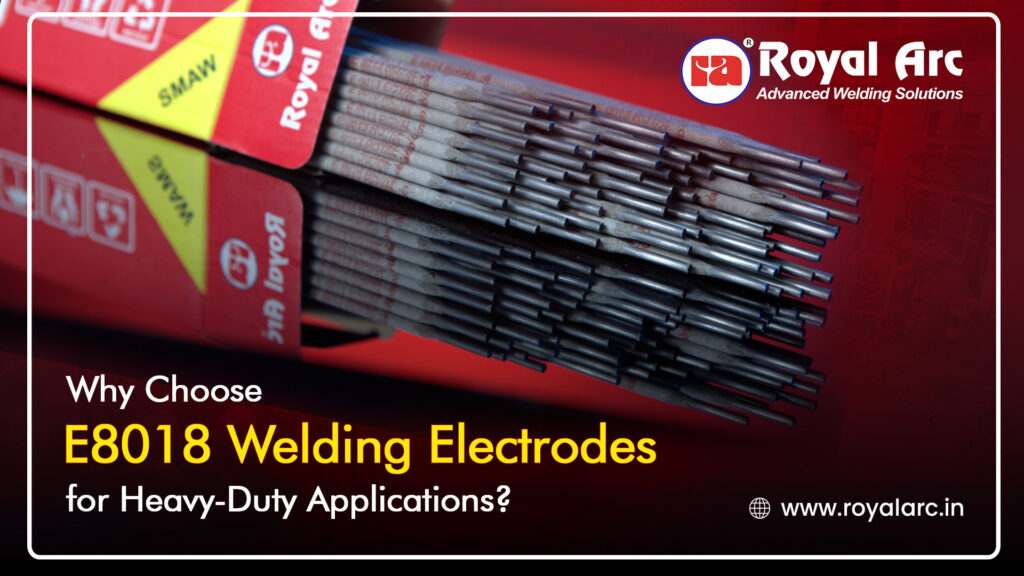
E8018 welding electrodes

Strength and safety are of great importance in industrial welding. In heavy machinery, structural projects and infrastructure works, the quality of welding directly decides the result. A weak weld can put the entire structure at risk. This is why industries choose electrodes that can deliver high power and stable performance. E8018 Welding Electrodes are considered the most reliable option today. These electrodes give strong, durable and secure weld joints. In this blog, we will understand in detail why E8018 Welding Electrodes are so important. So let’s move on to the main topic: What is E8018 Welding Electrode? E8018 Welding Electrodes are low-hydrogen type welding electrodes. They are primarily used for welding high-strength steel. These electrodes are designed to keep the hydrogen content in the weld low. Low hydrogen levels reduce the chance of cracking in the weld. E8018 Welding Electrodes melt and form a strong fusion with the base metal. This is why they are used in critical and heavy-duty applications. Importance of E8018 Welding Electrodes Heavy-duty applications subject the weld to constant pressure and vibration. Ordinary electrodes are not sufficient in such situations. For this reason, the use of these electrodes is considered essential in large projects. E8018 Welding Electrodes Key Features: All these features make these electrodes suitable for industrial use. How E8018 Welding Electrodes Work? E8018 Welding Electrodes generate an arc during welding. This arc melts both the base metal and the electrode. In this process, E8018 Welding Electrodes improve weld quality. Benefits of Using E8018 Welding Electrodes E8018 Welding Electrodes offer several important advantages. Let’s explore them: This makes them ideal for heavy-duty applications. Applications of E8018 Welding Electrodes Common Mistakes While Using E8018 Electrode Therefore, proper technique and caution are essential. Storage and Handling of E8018 Welding Electrodes E8018 Welding Electrodes must be stored properly. You should store them in a dry place to protect them from moisture. Moisture can cause cracking in the weld. It is also important to dry the electrode before use. Proper storage maintains weld quality. This makes welding safe and effective. Why Choose Royal Arc? This is why many industries choose Royal Arc for their critical projects. Conclusion E8018 Welding Electrodes are an ideal solution for heavy-duty applications. These provide strong, safe and durable welding. Choosing the right electrode ensures the success of an industrial project. If you want reliable and high-quality results, E8018 Welding Electrodes are the right choice. Royal Arc is committed to providing reliable welding solutions to industries. Contact us for more information.

Types of Products Offered by Welding Wires Manufacturers
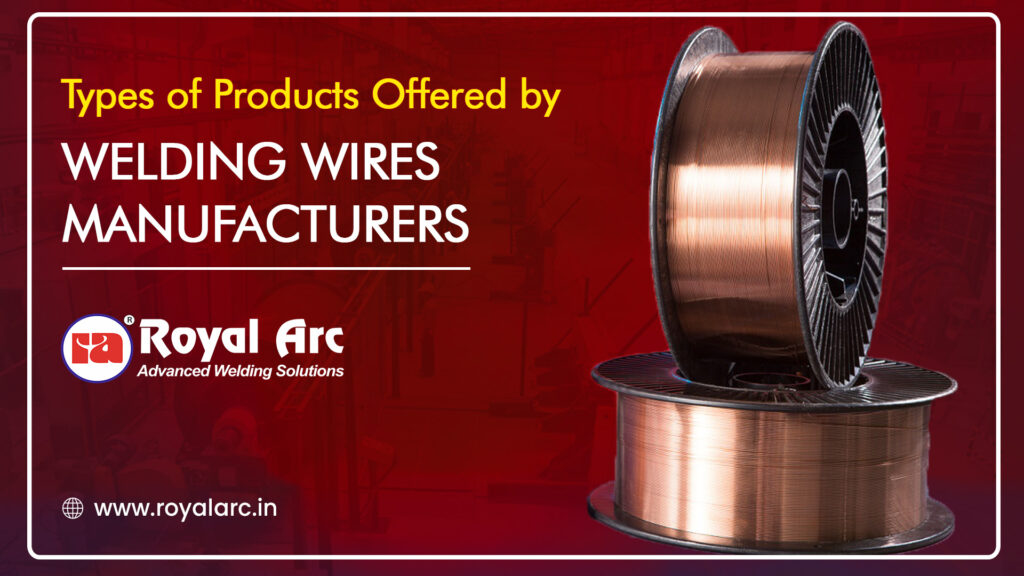
Welding Wires Manufacturers

With industrial development in India, the role of welding technology is continuously increasing. Today, many sectors like construction, automobile, chemical and food processing are dependent on stainless steel. All of these areas require strong and corrosion-resistant welding. For this reason, the demand for Stainless Steel Electrodes is increasing rapidly. Industries look for manufacturers who can deliver quality and reliable performance. Along with this, Welding Wires Manufacturers also play an important role in modern welding, because both the wire and the electrode together determine the quality of the weld. What are Stainless Steel Electrodes? Stainless Steel Electrodes are a special type of welding electrode. These are used for joining stainless steel and other metals. During welding, these electrodes melt to form a strong and durable joint. These electrodes contain chromium, nickel and other alloys. These elements protect the weld from corrosion, moisture and chemical influences. For this reason, stainless steel electrodes are considered more advanced than normal electrodes. Importance of Stainless Steel Electrodes in Welding Quality is of paramount importance in stainless steel welding. Using the wrong electrode can reduce the strength of the weld. Stainless steel electrodes provide better metal fusion. These protect the weld from corrosion and make it durable for a long time. These electrodes provide stable performance even in high temperatures and chemical environments. That is why their use is mandatory in many industrial projects. Key Properties of Stainless Steel Electrodes Stainless steel electrodes have certain characteristics that distinguish them from other electrodes. They have high corrosion resistance, which protects the weld for a long time. These electrodes create strong and durable joints. The welds made from these can withstand high temperatures. Apart from this, they reduce problems like cracking and porosity. This is why industries adopt them as long-term solutions. Types of Stainless Steel Electrodes Used in Industry Different types of stainless steel electrodes are used in industry. These are selected based on the material, application and welding conditions. Selecting the right stainless steel electrode ensures the quality and consistency of the weld. Applications of Stainless Steel Electrodes in Different Industries Stainless steel electrodes are used in many industries. Thus, their usefulness is visible in every industry. Challenges in Stainless Steel Welding and the Role of Electrodes Stainless steel welding presents several challenges. Leading Manufacturers of Stainless Steel Electrodes in India Several companies in India manufacture stainless steel electrodes. Leading manufacturers are those that focus on quality and technical expertise. These companies utilize modern technology and adhere to strict quality control measures. They provide different grades of electrodes for different industries. Along with this, Welding Wires Manufacturers also play an important role in the welding industry, because both wire and electrode together give better results. This is why industries prefer reliable manufacturers. Factors to Consider When Choosing a Stainless Steel Electrode Manufacturer Why Choose Royal Arc? That’s why many industries rely on Royal Arc for Stainless Steel Electrodes and other welding products. Conclusion The demand for stainless steel electrodes in India is steadily increasing. Industries look for manufacturers who can deliver quality and reliability. The right stainless steel electrode provides strong, safe, and durable welding. Along with this, Welding Wires Manufacturers also play an important role in the modern welding industry. Royal Arc trusted manufacturers are making significant contributions in this field by providing high-quality welding solutions to the industries.

Leading Manufacturers of Stainless Steel Electrodes in India

Stainless Steel Electrodes

The use of stainless steel has increased in the automobile, chemical, food processing, pharmaceutical and infrastructure sectors. Standard electrodes are not sufficient for joining stainless steel. Specially designed stainless steel electrodes are required. The reason for the rising demand for stainless steel electrodes in India is the industry’s need for reliable, high-quality manufacturing solutions that ensure consistent, safe results.  In this blog, we will understand in detail what a Stainless Steel Electrode is, its importance, and the leading manufacturers in India. What is a Stainless Steel Electrode? A stainless steel electrode is a special type of welding electrode. It is used to weld stainless steel or other metals. This electrode melts during welding to form a strong and corrosion-resistant joint. Stainless steel electrodes contain chromium, nickel and other alloying elements. These elements protect the weld from corrosion, temperature and chemical influences. This makes this electrode different and more important than a normal steel electrode. Importance of Stainless Steel Electrodes in Welding Key Properties of Stainless Steel Electrodes Stainless steel electrodes have some unique properties that set them apart. These include: For this reason, industries view stainless steel electrodes as a long-lasting solution. Types of Stainless Steel Electrodes Used in Industry Different types of stainless steel electrodes are used in industrial welding depending on the different stainless steel grades. These electrodes are selected based on the material type, application and welding conditions. Choosing the right stainless steel electrode ensures weld strength, corrosion resistance, and long-term performance. Applications of Stainless Steel Electrodes Across Different Industries Stainless steel electrodes are used in many industries. Let’s learn about its applications: Stainless Steel Electrode Manufacturing Process The manufacture of stainless steel electrodes is a controlled and technical process. Quality Standards and Certifications for Stainless Steel Electrodes High-quality stainless steel electrodes adhere to international standards like ISO and AWS, giving industry professionals confidence in their consistent, reliable performance. Welding with non-certified electrodes increases the risk. That is why industries always prefer certified stainless steel electrodes. Challenges Faced in Stainless Steel Welding and the Role of Electrodes Choosing the right stainless steel electrode is crucial for stabilising welds and preventing issues, empowering professionals to achieve optimal results in challenging conditions. Why Choose Royal Arc? This is why many industries rely on Royal Arc for stainless steel electrodes. Conclusion The demand for stainless steel electrodes in India is constantly increasing. Industries need manufacturers who can provide good quality. Stainless steel electrodes ensure strong, safe, and durable welding. If you want a reliable solution, choosing the right manufacturer is crucial. Royal Arc, with this vision, provides high-quality stainless steel electrode solutions to industries.

What Is Welding Wire? Types, Uses & Applications Explained

Welding Wire

Welding has become an important process in today’s industrial and construction sectors. Welding is required in every sector, like machinery manufacturing, structural fabrication, automobile and pipeline. But strong and safe welding depends heavily on selecting the correct welding wire, which is crucial for industry professionals aiming for high-quality results. Welding wire is a means of permanently joining two metals. If the wire quality is not correct, the entire joint can become weak. For this reason, welding wire is considered the backbone of welding in industry. In this blog, we will understand in detail what welding wire is. We will learn in detail about how welding wire works, its types, uses, and industrial applications. So, let’s move on to the main topic: What Is Welding Wire? Welding wire is a metal wire used as a filler material in the welding process. This wire melts during welding and acts as a filler between two metal surfaces. The primary purpose of welding wire is to create a strong, uniform, and durable weld joint. The types and composition of welding wire vary depending on the welding process. Some wires are continuously fed, while others are manually applied. Selecting the correct welding wire ensures the strength, finish, and safety of the weld. Therefore, welding wire is not just a consumable, but the most important component of welding. How Welding Wire Works in Welding Processes? Welding wire plays an active role during the welding process. When the welding machine is turned on, an electric arc is formed between the welding wire and the base metal. This arc generates intense heat, causing the wire and base metal to melt. The molten welding wire fills the weld joint and creates a strong fusion. In some processes, shielding gas or flux protects the wire from outside air. As the weld cools, a solid and durable joint is formed. The purity and quality of welding wire play a crucial role in this entire process. Types of Welding Wire? Welding wire comes in many types depending on the welding process and application. Each type is designed for a specific purpose. Welding wire is broadly classified into MIG, TIG, Flux Cored, and SAW wire, each with unique benefits and limitations. For example, MIG wires are ideal for high-speed, clean welding, while TIG wires offer precision for critical applications. Understanding these differences enables professionals to select the most effective wire for their specific welding needs. The selection of each wire depends on the base metal, welding position, and working environment. The right type of welding wire makes welding easier, safer, and more effective. MIG Welding Wire and Its Applications MIG Welding Wire is one of the most commonly used welding wires. It provides continuous feed and fast welding. Welding with MIG Welding Wire is clean and uniform. It is used in the automobile industry, fabrication, structural work, and machinery manufacturing. Industries prefer MIG Welding Wire due to its high productivity and low spatter. It is particularly suitable for light and medium-thick metals. TIG Welding Wire and Its Applications TIG Welding Wire is used for high-precision welding. The wire is manually fed, providing complete control over the weld. Welds made with TIG Welding Wire are clean, strong, and beautiful. It is used in welding stainless steel, aluminium, and special alloys. TIG Welding Wire is widely used in the food industry, chemical plants, and aerospace sectors. Where finish and quality are paramount, this welding wire is the ideal choice. Materials Used in Manufacturing Welding Wire Uses of Welding Wire in Different Industries Common Welding Problems Caused by Poor Quality Welding Wire Therefore, selecting high-quality welding wire is essential to prevent common problems like porosity and cracks, helping students and professionals feel confident in the reliability of their work. What to consider when choosing welding wire? Why Choose Royal Arc for Welding Wire Solutions? This is why Royal Arc is preferred for many industrial projects. Conclusion Welding wire is the most critical component of the welding process. It determines the strength, safety, and lifespan of the weld. Choosing the right welding wire ensures the success of any project. If you want quality and reliable results in industrial welding, choosing the right welding wire is essential. Royal Arc works with this vision to provide high-quality welding solutions to industrie FAQs

What Is MIG Wire? Types, Uses & Benefits Explained

Mig wire

Quality, strength, and consistency are considered paramount in the modern welding industry. In every industrial project, welding is not limited to just making joints. Welding determines the safety, lifespan, and performance of structures, making the quality and selection of the correct welding wire essential for reliable results. In today’s time, Mig Wire has become an important part of the welding industry. Industries prefer MIG welding due to faster production, clean finish and strong joints. If the Mig Wire quality is not up to the mark, even the best machines and skilled welders can produce poor results. In this blog, we will understand in detail what is Mig Wire, how it works, its types, uses and advantages. So, let’s move on to the main topic: What is MIG Wire? Mig wire is a special type of welding wire that is used in the MIG welding process. It is a thin metal wire that is continuously fed through the welding machine. Mig Wire melts during welding to form a strong and permanent joint between two metals. The biggest feature of Mig Wire is its continuous feed system. This ensures faster welding and production. This wire is available in different metal grades and thicknesses. This is why Mig Wire is most commonly used in industrial and large-scale welding projects. How MIG Welding Works? MIG Welding is a continuous welding process. In this process, MIG wire is continuously fed through a welding gun. As the MIG wire comes into contact with the base metal, an electric arc is generated. This arc produces high temperatures, causing the MIG wire and base metal to melt. Shielding gas protects the weld pool from air, moisture, and oxygen. After the metal melts and cools, a strong weld joint is formed. Difference Between MIG Wire and Other Welding Wire Not every welding wire performs the same function. MIG wire is specifically designed for fast and consistent welding. It works with automatic feed system. Other welding wires like SMAW or TIG wire require more manual intervention. The welder has to change the electrode frequently, which slows down the production speed. MIG wire moves continuously and maintains welding consistency. This is why MIG wire is preferred for large and repeated projects. Types of MIG Wire Materials Used in MIG Wire Mig wire is made from various metals and alloys. The most common material is carbon steel. Stainless Steel Mig Wire Provides High Corrosion Resistance. Aluminum based Mig Wire helps in making light but strong joints. Special alloy Mig Wire is made for high temperature and pressure environments. Correct material selection determines the quality of welding and the life of the joint. Uses of MIG Wire in Different Industries MIG wire is used in almost every industrial sector. It is used for body and frame welding in the automobile industry. Mig Wire is useful for beams, columns and structures in the construction sector. It is used for heavy parts and housings in the machinery industry. Mig wire is essential for pipeline welding in the oil and gas industry. Due to its fast and strong results, Mig Wire has become the first choice of industries. Benefits of Using MIG Wire Mig wire gives several important advantages. How MIG Wire Improves Weld Quality? High-quality MIG wire provides deeper penetration to the weld. This makes the joint stronger and more durable. Possibility of porosity and cracking in the weld is reduced. A clean finish reduces post-weld processing. The structural strength of the weld is maintained for a long time. Therefore, the right MIG wire plays a vital role in improving weld quality. Factors to Consider While Choosing MIG Wire Why Choose Royal Arc? This is why many industries choose Royal Arc for their important projects. Conclusion Mig wire has become a strong foundation of modern industrial welding. It provides fast, clean and strong welding results. Choosing the right Mig Wire and Welding Wire determines the success of the project. If you want quality, safety, and durability in welding, the right choice of Mig Wire is essential. Royal Arc follows this philosophy and provides reliable and high-performance welding solutions to industries.

Why Welding Consumables Matter in Industrial Welding Projects?

Welding Consumables

Understanding why welding consumables are crucial in industrial welding projects helps professionals appreciate their role in ensuring strong, safe, and cost-effective welds from the start. Strength and durability for a long time performance are essential in industrial welding projects. Be it heavy machinery, large structures or pipeline projects, the quality of welding plays a strong role everywhere. Often, people pay more attention to welding machines and technology, but the real basis of welding is welding consumables. If welding consumables are not chosen correctly, the welds can be weak despite having the best machines and skilled welders. For this reason, ignoring welding consumables is considered the biggest mistake in industrial welding. In this blog, we will know in detail about Why Welding Consumables Matter in Industrial Welding Projects. So let’s move on to the main topic: What Are Welding Consumables? Welding consumables are materials that are used during the welding process and become part of the weld joint. Their main function is to create a strong and permanent joint between two metals. Welding consumables include materials such as electrodes, welding wire, flux, and shielding gas. These consumables melt and fuse with the base metal and determine the strength of the weld. Therefore, the quality of welding consumables directly influences the safety, durability, and long-term performance of the welds, inspiring trust in your projects. Role of Welding Consumables in Industrial Welding Projects: Welding in industrial projects is not limited to just making joints. It determines the strength, safety and lifespan of the structure. Therefore, thoughtfully selecting the right welding consumables helps you feel confident in achieving optimal strength, safety, and longevity in your projects. Types of Welding Consumables Used in Industry Different types of welding consumables are used in industry for different welding processes. The main types are: Each consumable is selected according to the base metal, joint design and welding process. Why Quality Welding Consumables Are Critical for Weld Strength? The actual strength of the weld joint comes from welding consumables. High-quality consumables provide deep and fuse metal. Welds made with good consumables remain crack-free for a long time. Poor-quality consumables lead to weak welds, which can lead to future failure. Therefore, certified and reliable Welding Consumables are always preferred in the industry. How Welding Consumables Affect Productivity and Cost Efficiency? The impact of Welding Consumables is not limited to quality only. They also affect the speed and cost of production. Good consumables result in smoother welding, reduced spatter, and reduced rework, saving both time and labour. Meanwhile, substandard consumables cause frequent defects, increasing costs. Therefore, the right welding consumables prove to be economical in the long run. Common Welding Problems Caused by Poor-Quality  Consumables: This is why cheap and unbranded consumables are avoided in industrial projects. Factors to Consider While Selecting Welding Consumables: There are several things you need to consider when selecting welding consumables to make your project successful. For example, the type of base metal is considered first. Correct selection ensures the success of welding. Importance of Certified and Tested Welding Consumables Certified Welding Consumables are essential for industrial welding. These consumables are manufactured as per the set standards. Each batch is tested. This ensures consistent and reliable welding results. Untested consumables increase project risk. That is why big industries always use certified welding consumables. Welding Consumables and Safety in Industrial Welding Safety is paramount in industrial welding. Good welding consumables produce less smoke and spatter during welding, making it safer for the welder to work. Also, strong weld joints reduce the chances of accidents in the future. This is why Welding Consumables are very important from a safety point of view also. Why Choose Royal Arc? The company also provides technical support and a reliable supply network. This is why many industries trust Royal Arc for their critical projects. Conclusion Success in industrial welding projects doesn’t depend solely on the machine or technique. Welding consumables make the real difference. The right consumables make welds strong, safe, and durable. They increase production efficiency and keep costs under control. Therefore, Welding Consumables should be selected wisely in every industrial project. Royal Arc follows this philosophy and provides reliable and high-quality welding solutions to industries.

Welding Companies in India: Services, Pricing and Quality Checklist

welding companies in India

India is moving fast on the path of development. New factories, construction projects, rail corridors, industrial hubs, power plants and infrastructure development are constantly on the rise. Welding plays an important role in all these areas. If the welding is not strong, no machine will work properly, and no structure will be safe. Therefore, Welding Companies in India have today become a vital pillar in India’s industrial development. A good welding company doesn’t just make joints. It makes the project reliable and long-lasting. So let’s move on to the main topic and learn more about ‘Welding Companies in India: Services, Pricing, and Quality Checklist’: What do welding companies do? Welding companies manufacture materials that join metals. They play a role throughout the project lifecycle, including design, fabrication, cutting, welding, finishing, installation and maintenance. They choose the right welding technique according to the project. For example: Along with this, good companies choose only such filler material which can keep the joint safe for a long time. That’s why experienced welding companies are essential for any industry. Types of Welding Services: Welding services in India are very diverse. Every project has different requirements, so welding services are also provided in various ways. The most common types of services are: Every service requires the right process, the right welder, and the right materials. Only then is the weld safe. Growth of the Welding Industry in India The welding industry is growing more than ever in India, which should make industry professionals feel optimistic about future prospects and opportunities. Some important reasons are: Today, welding is no longer limited to manual techniques. Now companies are also moving towards CNC, robotic and automated welding systems. This has further increased the need for reliable welding wire manufacturers and suppliers of consumables. Pricing Structure of Welding Services The pricing of welding services depends on many factors. There is no fixed fee model because every project is different. Key factors that determine pricing include: The greater the safety and durability requirements, the higher the welding budget. Choosing the right welding company requires understanding industry-specific criteria such as project size, industry standards, and technical expertise to ensure your project’s success. Choosing the right welding company is crucial to your project’s success. When selecting a company, consider the following: If the answers in all these areas are positive, then that company may be the right choice for your project. Importance of Choosing Certified and Reputed Welding Wire Manufacturers Welding results depend 50% on technique and 50% on material. Therefore, it is essential to choose good welding wire manufacturers. Advantages of the right material: The risk of using faulty or cheap materials is very high. Therefore, filler material should be purchased only from a certified and reputable manufacturer. Quality Checklist for Welding Services Before hiring any welding company, these simple quality checks are essential: If this checklist is met, the results are usually successful and sustainable. Role of Welding Technology and Materials in Service Quality The more modern technology the welding company uses, the better the results will be. For example, MIG, TIG, SAW, and FCAW processes produce faster, cleaner, and more precise joints. The wire, electrodes, and flux used are equally important. Welding standards remain high only when the industry combines quality consumables with good machinery. Why is Royal Arc a Trusted Brand in the Indian Welding Industry? Royal Arc has long been a trusted identity in the Indian welding industry. The company develops high-end welding consumables and manufactures products by understanding the needs of the industries. Royal Arc is adored by the industry because: Conclusion The welding industry in India is rapidly growing, and its demand will only increase in the future. But the true value of welding is only achieved when the right welding company, materials, and techniques come together. Therefore, it is important to keep in mind the services, certification, pricing and safety standards while choosing Welding Companies in India. Also, it is essential to choose reliable Welding Wire Manufacturers when purchasing consumables. Royal Arc has been providing industries with strong, safe, and high-quality welding solutions for years. That’s why thousands of businesses trust Royal Arc. Strong welding creates a strong future. Strong welding comes from the right selection.

How SMAW Welding EM12K Improves Structural Welding Quality

SMAW Welding EM12K

Today every industry is dependent on welding. From large machines to heavy structures, everything is incomplete without welding. If the weld is weak, the entire structure is at risk. Therefore, choosing the right welding technique and the right filler material is very important. One such reliable technique is SMAW Welding. Its proven durability and consistency make it a trusted choice for heavy projects, reinforcing trust in the process. Royal Arc designs its welding products with this combination in mind, ensuring welders get both quality and reliability. What is SMAW Welding? SMAW stands for Shielded Metal Arc Welding. It is also called stick welding because the electrode is stick-like. In this technique, the welder uses a flux-coated electrode. An arc is formed between the electrode and the base metal. This arc melts the metal and creates the joint. The flux coating forms slag over the weld. This slag protects the metal from air and keeps the weld pool stable. After the weld cools, the welder removes the slag, resulting in a solid, strong, and clean joint. The great thing about SMAW welding is that it is straightforward and accessible. You can perform it with minimal equipment-just a machine, cables, electrode holder, earth clamp, and electrodes. No complex gas systems or high-tech setups are needed, making it a reliable choice for all users. Working Principle of SMAW Welding: The entire process in SMAW is very simple, but technically quite impressive. The welder places the electrode in the holder and turns on the power source. When the electrode touches the base metal and then slightly removes it, an arc is formed. This arc generates a lot of heat. This heat melts both the top portion of the base metal and the electrode tip. The molten metal that forms is the weld pool. The flux melts and forms a gas shield and slag layer over this pool. This layer protects the weld from oxygen, nitrogen, and surrounding moisture. When the weld cools, the metal solidifies, forming a permanent joint. The welder then removes the slag with a chipping tool or wire brush. He can also throw up and pass if needed. This simple yet effective principle makes Smaw Welding useful in all types of projects. Advantages of SMAW Welding: The advantages of Smaw Welding make it very practical even today. Simple setup: This technique doesn’t require a lot of equipment. A power source, an electrode holder, and some electrodes are all it takes. Useful everywhere: You can perform Smaw Welding on the shop floor, site, plant, workshop, or even in remote locations. It works even in wind, light rain, dust – where other processes stop. Versatile Materials: This allows you to work on carbon steel, low alloy steel, some stainless, cast iron, etc., with the right electrode. Heavy Duty Joints: Thick plates, structural beams, machine frames, pipes – Smaw Welding provides excellent penetration and strength on all of them. That is why, even though automatic and semi-automatic processes have come into existence, SMAW still remains the first choice for “field work” and “tough conditions”. Limitations of SMAW Welding: Every technique has limitations, including Smaw Welding. The electrode length is fixed. When one electrode runs out, the welder must insert a new electrode. This slows down continuous welding. Slag removal is necessary after each pass. If the slag is not removed properly, the next pass will not fuse properly. Production speed may be lower than processes like MIG and SAW, especially in high-volume, repetitive jobs. However, where conditions are difficult, budgets are limited, and field welding is required, Smaw Welding still proves to be the most practical. What is EM12K?  This high-quality low-alloy or carbon steel filler wire offers exceptional strength and reliability, instilling confidence in demanding projects. Now let’s talk about Em12k. Em12k is the name of a welding filler wire/grade. It is designed for welding high-quality low-alloy or carbon steel (often in SAW, and also in other process combinations depending on the project). The uniqueness of Em12k lies in its chemical composition. Its balance of silicon and manganese provides a clean, strong, and well-finished weld metal. Welds made with this grade have good machinability and a strong joint. When a project involves heavy loads, vibrations, or continuous stress, grades like Em12k are more reliable. This is why the industry is interested in them. Understanding how SMAW electrodes like Em12k integrate with other welding processes ensures consistent strength throughout the project, addressing concerns about process compatibility and quality control. Sometimes you might wonder, SMAW is stick welding, and Em12k is a wire grade. So where does the combination of Smaw Welding and Em12k fit in? In fact, it’s often the case in industry that different processes and consumables are used on different sections of a single project. For example: Em12k is used for SAW or automated welding on one part of a structure. On-site repairs, joint finishing, or difficult-to-reach areas are often accomplished with Smaw Welding. When the entire project is designed with the strength level and compatibility of the Em12k grade in mind, the SMAW electrodes used in the field are fully compatible with the Em12k grade. This ensures consistent quality and performance across different project stages. This is where the concept of Smaw Welding Em12k comes from. This means that the project uses the SMAW process, yet the grade or strength level matches that of Em12k. Manufacturers like Royal Arc ensure that their products work in combination, not just as standalone items. Why is SMAW Welding Em12k a Strong Combination? When you combine Smaw Welding with Em12k, a few key points become clear. You get a process that’s flexible depending on the conditions. You also get a grade that offers high levels of strength and performance. The advantages of this combination are as follows: You can maintain a strength class similar to Em12k on larger projects. SMAW can be used for field welding or repairs, but the results can be kept consistent with the project’s main grade. The welding output is