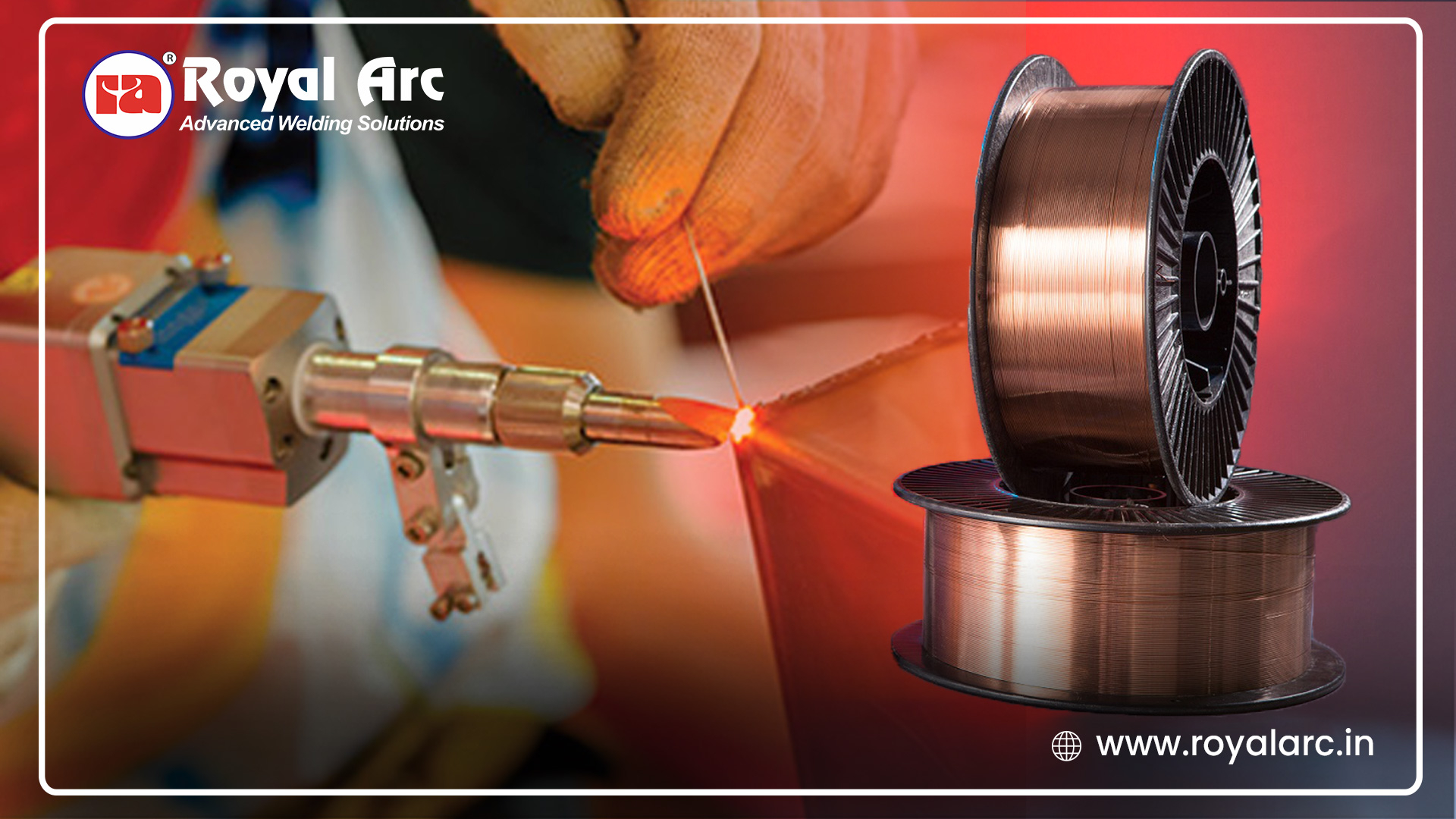
Industry relies on robust infrastructure and stable production. But strong production is not possible with machines alone. Even seemingly small welding consumables make a big impact.
Welding wire is the most important of these consumables. It’s not just a means of joining metals; it impacts both production speed and quality.
The automotive, construction, and energy sectors are constantly evolving, increasing the demand for greater precision and consistency.
International manufacturing reports have indicated a similar trend for many years. High quality welding consumables help reduce defects. This can improve production efficiency and material utilization.
The production manager of a fabrication unit shared that the repair cycle reduced noticeably after changing the wire selection. Their team reduced both finishing time and material loss.
This is why the industry no longer chooses only equipment. They also choose the right welding wire and the right process. In this blog, we’ll understand what welding wire is and its uses.
What is Welding Wire?
Welding wire is a filler material used in the welding process. It creates a strong and stable joint between two metals. During welding the wire melts due to the effect of heat. Then it forms a fusion with the base metal.
After cooling, the final weld structure is formed. This determines the strength of the final weld component. Not every welding wires is made for the same purpose. Different applications require different wire composition.
Some welding wires are made for a clean finish. Some wires handle high penetration and heavy fabrication. That is why the right choice can influence industrial success.
Why Welding Wire Plays a Critical Role in Industrial Manufacturing?
Industrial manufacturing is no longer based solely on speed. Industries want both quality and repeatability.
Welding wire plays a vital role in achieving this goal. This affects weld consistency and final component quality.
If wire performance is unstable, defects may increase. This can also increase downtime and inspection failures.
Manufacturing studies often show that rework and waste significantly increase production costs. One of the reasons for these problems is wrong consumable selection.
High-quality welding wires can provide controlled deposition, making production output more predictable.
How Welding Wire Support Different Welding Processes?
Welding processes work differently, but welding wire plays a vital role in most processes.
MIG welding involves a continuous wire feed, which contributes to fast and consistent production.
TIG welding uses a more controlled approach, focusing on a clean appearance and precision.
Flux-based systems are capable of handling harsh conditions. Some applications also require deeper penetration.
That is why it is important to understand the process and wire selection together.
Types of Welding Wires Used Across Industries
Different industries have different performance requirements, which is why different types of welding wires are used.
1. MIG Wire
MIG wire is popular for its fast production and smooth welding. It finds wide use in the manufacturing and fabrication sectors.
2. TIG Wire
TIG Wire provides controlled welding and a better finish. It is used in precision-based applications.
3. Flux Cored Wire
Flux Cored Wire can deliver effective performance in difficult environments. It is a suitable choice for heavy-duty fabrication.
Arc Welding Wires
Arc welding wires are used in industrial joining and structural work. They are known for their strong weld formation.
5. Specialty Wire
Specialty Wire is developed for specialized applications. It is used in extreme performance environments.
Applications of Welding Wire in Various Industries
Welding wire has become a part of almost every major industry. However, each industry uses it for a different purpose.
In the construction industry, it is used for structural joining. This is important in bridges, industrial buildings, and steel frameworks.
The automotive sector focuses on both speed and appearance. Welding wires can improve productivity and consistency here.
The oil and gas sector deals with harsh environments. Therefore, reliability and durability are more important here.
Machinery manufacturing relies on heavy-duty joining. Wire selection here affects final performance.
The shipbuilding industry demands both corrosion and strength. This is where the right welding wire can provide long-term benefits.
Role of Welding Wire in Improving Productivity and Operational Efficiency
Industries don’t just want higher production. They also want more controlled and stable production. This is where the right welding wire makes a significant difference.
This not only creates the weld, but also affects the workflow. High quality welding wires can maintain stable deposition. This can reduce interruptions and unnecessary adjustments.
Many manufacturing environments depend on repeatability. If each weld produces a different result, efficiency is affected. A medium-sized fabrication facility shared internal observations.
They reduced repair frequency after improving wire selection. Their team experienced a clear improvement in finishing time. The right welding wire can impact the following areas:
- Production continuity
- Operator efficiency
- Material utilization
- Inspection performance
When production is stable, operational costs are also controlled.
How Welding Wires Influence Weld Strength and Performance?
Weld strength is not determined solely by the thickness of the metal. Consumable selection also affects the final result. Welding wires can affect weld penetration and fusion. They can also affect the durability of the final joint.
Good quality wire helps in uniform bead formation. This can make structural performance more predictable. Performance is not limited to appearance only. Long-term durability is equally important. This is why industries consider wire selection a technical decision.
Common Industrial Challenges and How the Right Welding Wire Helps
Industrial setups face some common production challenges. Many of these problems are related to consumable selection. Poor wire selection can lead to inconsistent weld quality. This can cause downtime and additional inspections.
Some common challenges are listed below:
- Repeated weld defects
- Inconsistent penetration
- Excessive material consumption
- Productivity loss
- Unstable welding performance
The right welding wire can help minimize these problems. It can make the production process more controlled.
Things to Consider When Choosing a Welding Wire
Choosing the right welding wire isn’t just about reading a technical sheet. It’s about understanding the application and long-term goals.
Consider these factors before purchasing:
- Base metal compatibility
- Required weld appearance
- Environmental conditions
- Production requirements
- Expected durability
- Maintenance expectations
If the selection process is structured, results can be more stable and useful.
How to Identify High-Quality Welding Wire?
Many types of welding wire are available on the market. But not all products offer the same quality. High-quality wire provides a consistent finish. Its performance remains stable across different batches. When conducting a product evaluation, consider the following:
- Wire finish consistency
- Packaging quality
- Manufacturing reliability
- Application suitability
- Supplier support
These indicators can help you make better selection decisions.
Why Choose Royal Arc for Welding Wire Solutions?
Royal Arc develops solutions for various industrial applications.
The company focuses on consistency and practical performance.
Royal Arc understands and works with various welding requirements.
Every solution is developed keeping industrial expectations in mind.
The company focuses on maintaining stable support and reliable supply.
It works towards creating long-term industrial value.
If your goal is to increase both performance and reliability, choosing the right solution partner becomes crucial.
Conclusion
Industrial manufacturing has become more competitive than ever. In this environment, correct welding wire selection becomes crucial. Correct welding wires can improve both productivity and consistency. They can reduce defects and hidden operational losses.
Industry requirements vary. Therefore, wire selection should also be application-based. If the selection process is correct, production performance can remain better for a long time.
Royal Arc provides superior welding solutions with this vision. Contact us for more information.
FAQs
What is the main use of welding wire?
Welding wire helps in creating strong and durable weld joints between metals. These are the main uses of this wire.
Do all industries use the same welding wires?
No, every industry chooses according to its application and performance needs.
Can the right welding wire affect productivity?
Yes, the right wire can help improve efficiency by reducing defects.
What is the most important factor when choosing welding wire?
Base metal compatibility and application requirements are considered most important.
Why should welding wires be stored correctly?
Helps maintain proper storage performance and reduce contamination.